Beyond the Guidebook: People of The Gambia
A journey through The Gambia beyond tourist spots, discovering daily life along the river.
11/14/20255 min read
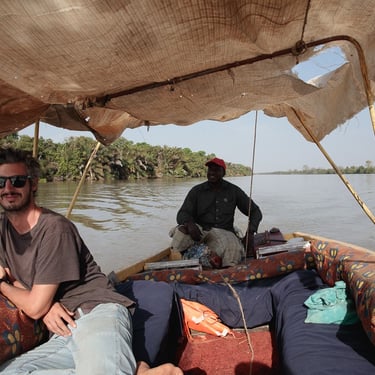
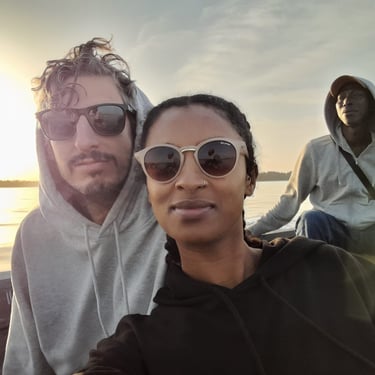
Later that afternoon, we set out on the river with Captain Hippo. The stillness of the water, broken only by the rhythmic sound of the boat’s engine, created a peaceful rhythm. At one point, Captain Hippo pointed to a distant ripple — and there it was: the broad back of a hippo, surfacing briefly before slipping beneath the water again.
As the sun began to sink behind the mangroves, the sky reflected in hues of gold and crimson. We sat in silence, taking it all in — the hum of insects, the cool air, the sense of connection to a place and its people that travel so rarely delivers.
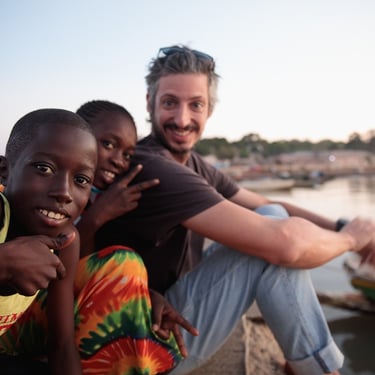
Our journey through The Gambia was never about checking off sights or following a guidebook. It was about the small, unplanned moments — the laughter of schoolgirls on a pier, the kindness of a taxi driver, the quiet pride of a man showing us his river.
In the end, The Gambia gave us far more than we expected: not just beautiful landscapes and warm hospitality, but a renewed belief in the power of slow, intentional travel — travel that values people over places, and stories over souvenirs.
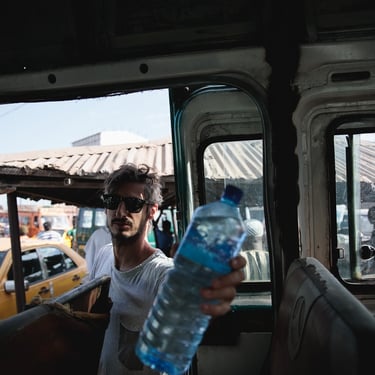
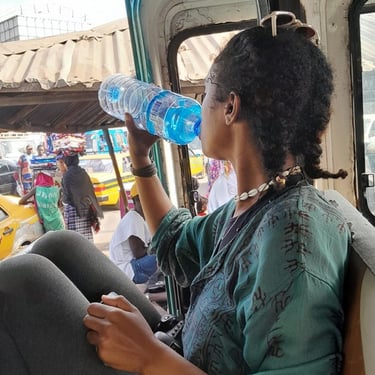
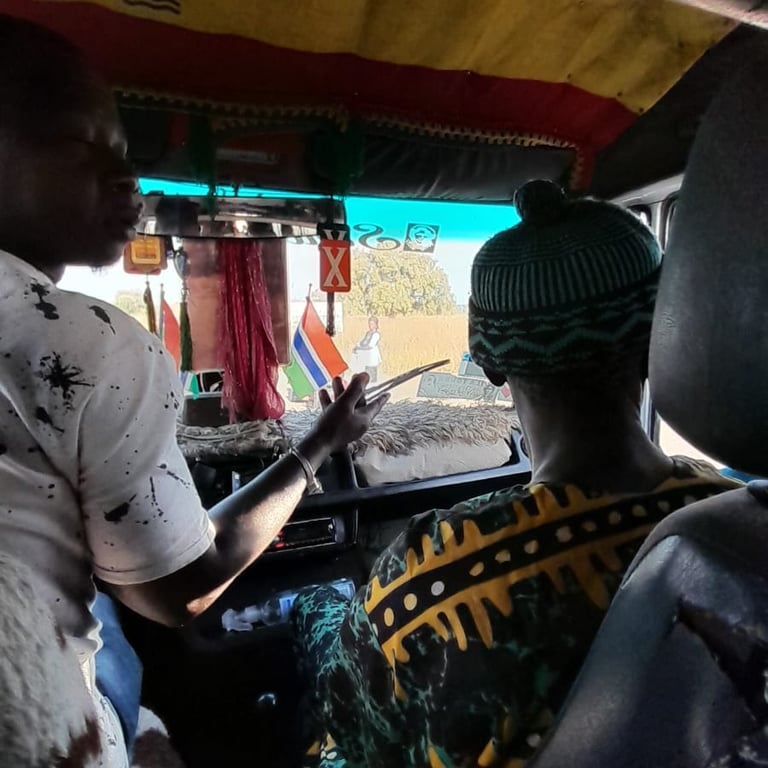
The bus rattles past fields of red dust as we make our way through The Gambia — a sliver of land wrapped by Senegal and stretched along the river that gives it life. Our plan is simple: to move with the country’s rhythm, travel the way locals do, and let the journey unfold on its own. No set itinerary — just curiosity as our guide, and the hope that along the way we’ll find the everyday stories that rarely make it into guidebooks.
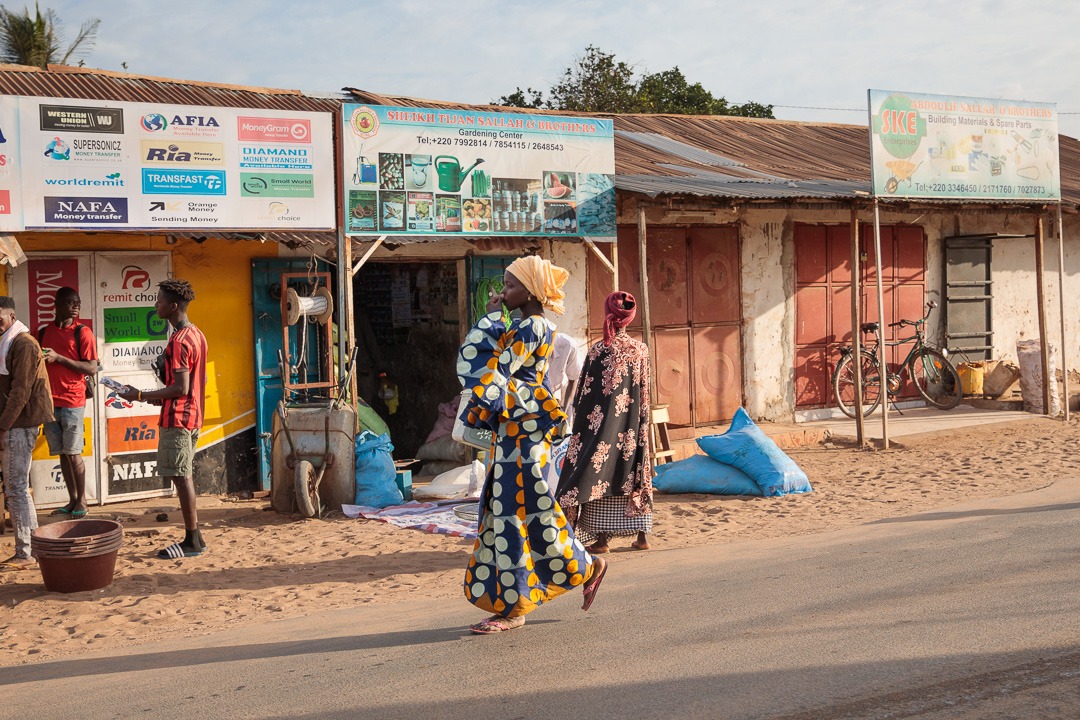
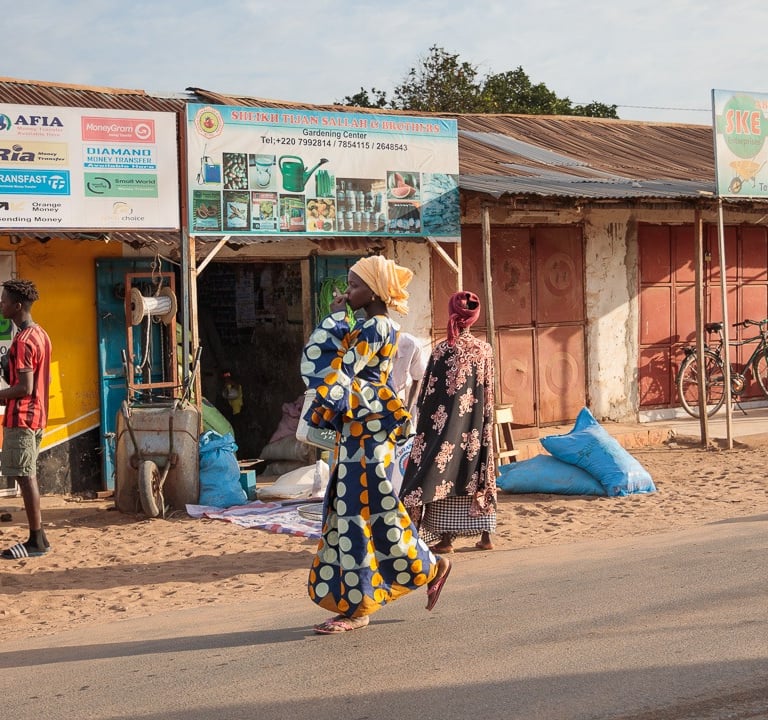
What draws us are the people — their stories, traditions, and the rhythm of daily life. To our surprise, that curiosity is mutual. Long, bumpy bus rides turn into language lessons and storytelling sessions, where we trade laughter and learn about music, family, and the small rituals that make up everyday living
It’s impossible to travel through The Gambia without noticing how deeply the country depends on tourism. Yet despite its long-standing role as a pillar of the economy, the benefits rarely reach most Gambians. Many hotels and resorts are foreign-owned, meaning much of the revenue flows out of the country. For many locals, tourism offers work — but often low-paid, seasonal jobs that do little to close the gap of inequality.
Determined to travel in a way that truly connects with local communities, we decide to follow the Gambia River without booking ahead — trusting local advice and intuition instead. We skip the Senegambia strip, the center of the country’s mass tourism, and choose a small, family-run lodge in Serrekunda for our first night.
The address on Google Maps turned out to be inaccurate, and finding the place became a small adventure of its own. Our driver, cheerful and endlessly patient, made several calls, checked directions twice, and refused to leave until he saw us safely inside. His kindness turned what could have been a frustrating arrival into a warm welcome — our first real glimpse of the generosity and care that define Gambian hospitality.
The next morning, the hotel manager insisted on driving us to meet our Gambian friends — people first encountered months earlier during a trip to Cabo Verde, whom we had promised to visit. Before parting ways, he handed over a bag of fresh tangerines — another small gesture of kindness that added to the quiet warmth encountered at every turn.
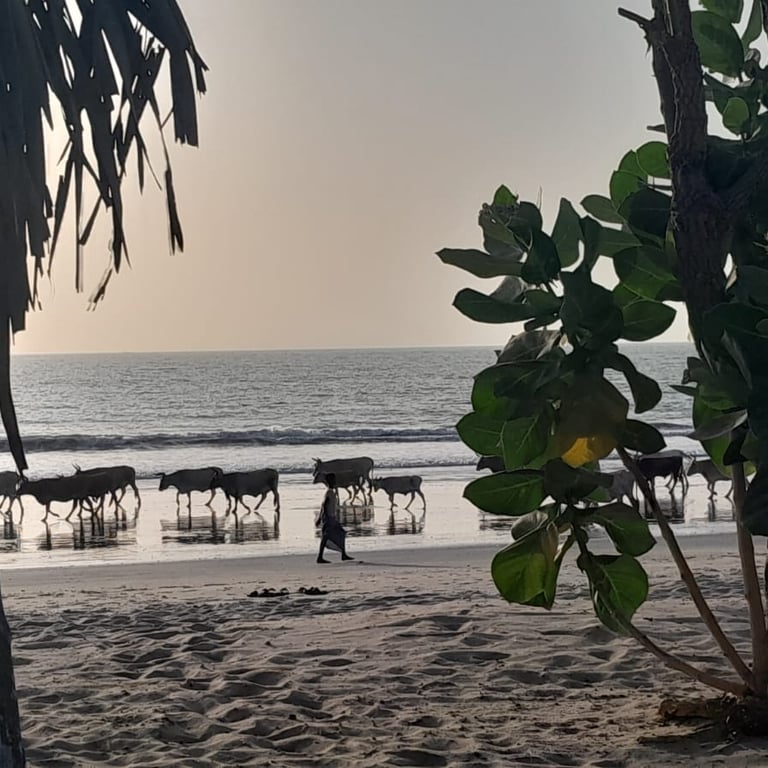
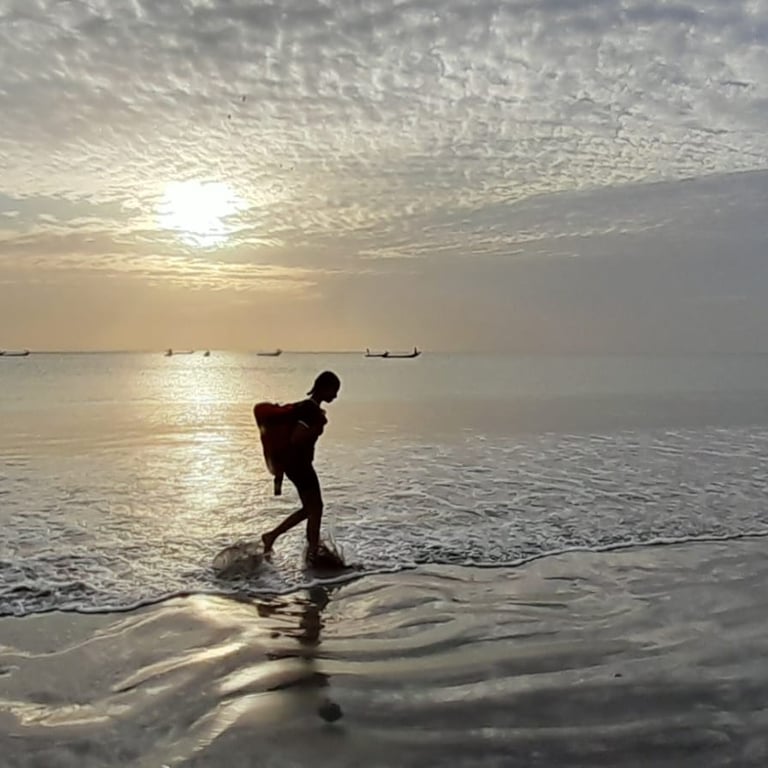
The day unfolded gently: hours spent with friends wandering along quiet beaches, lingering by the water, and sharing plates of freshly grilled fish at a small beach bar. As night fell, thoughts turned inland — tomorrow the journey would continue, deeper into the country.
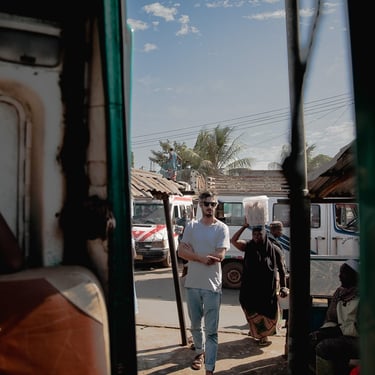
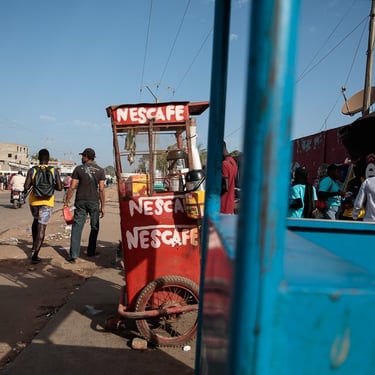
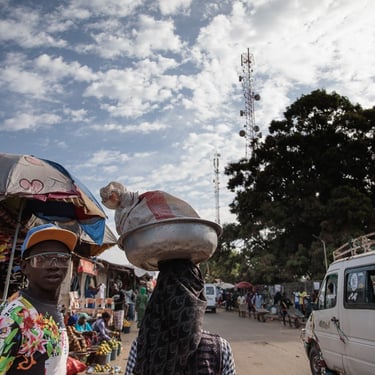
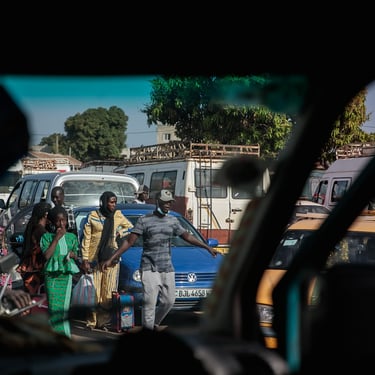
The bus station is chaotic in the best possible way — shouts, laughter, and honking horns blending into a single, lively rhythm. We pause at a tiny currency exchange and are told to head toward a riverside village called Tendaba. Finding the right bus turns out be an adventure. Amid the heat and confusion, we stop for street coffee — sweet Nescafé in tiny cups for just a few coins — and chat with locals curious about our destination. In turn, we share pieces of our lives, while they tell us about school, weddings, and the everyday rhythms that shape their days.
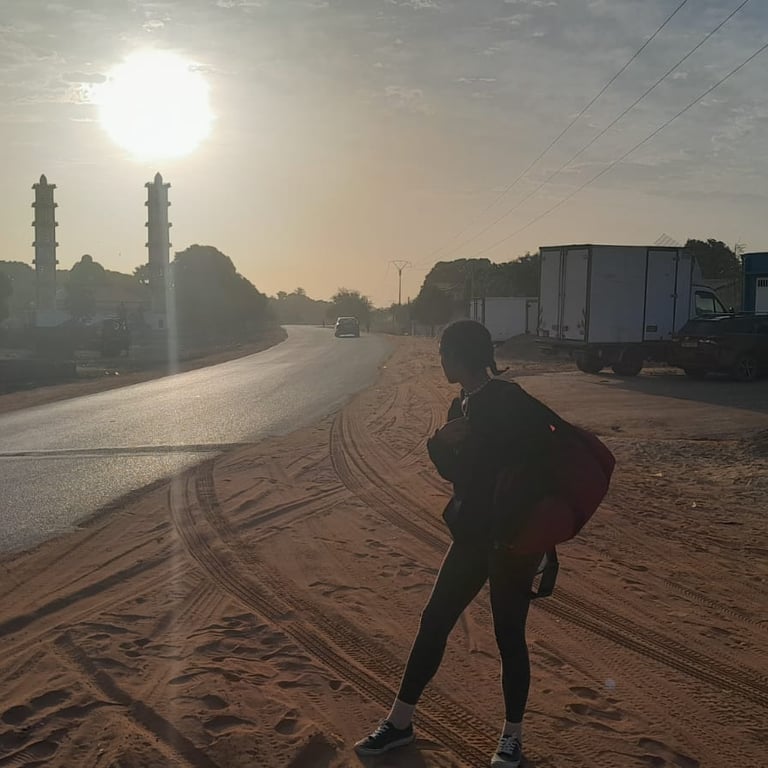
After a long bus ride, the driver dropped us on the main road outside Tendaba. A few cheerful schoolgirls pointed out a path toward the village and mentioned that a shuttle from a nearby lodge would soon pass to take them home. The walk would have taken over an hour in the dry afternoon heat, so staying to wait with them seemed the wiser choice. When the shuttle finally arrived, the girls made space with infectious laughter, and together we rode to a place called Tendaba Camp — a rustic lodge known for birdwatching and river safaris.
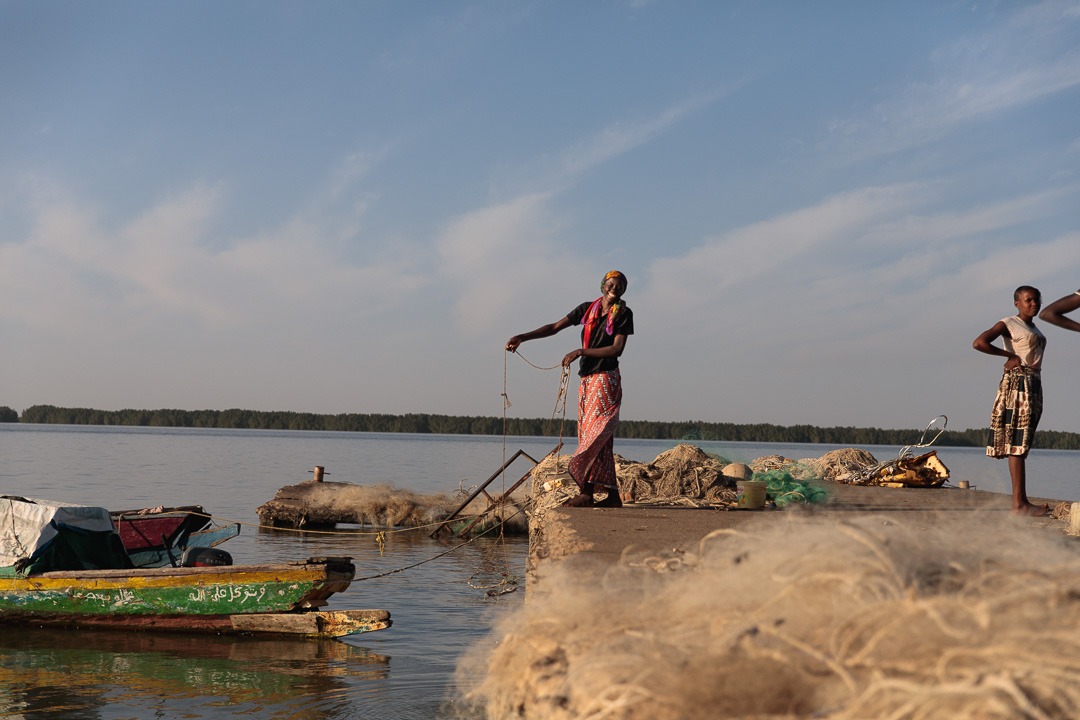
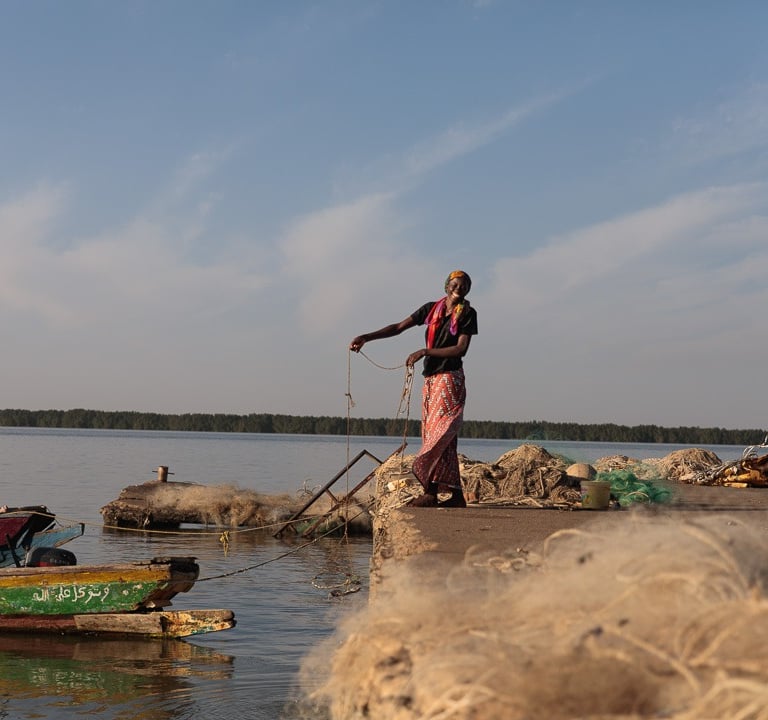
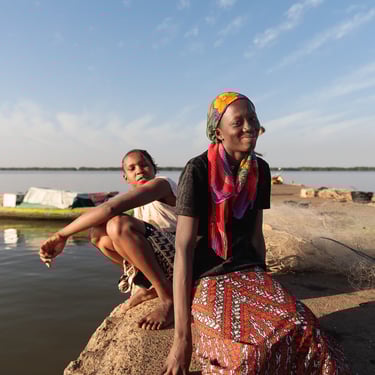
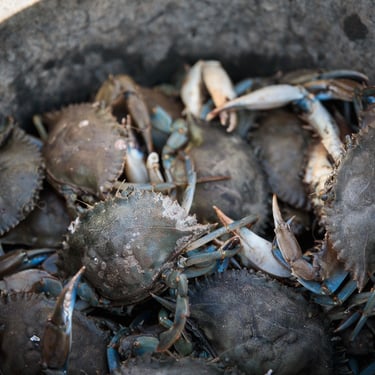
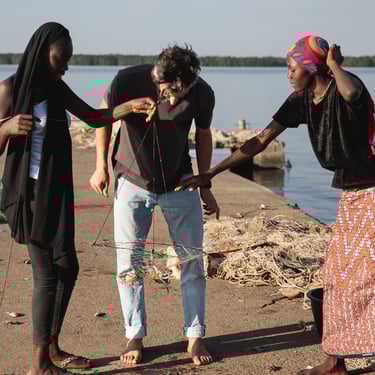
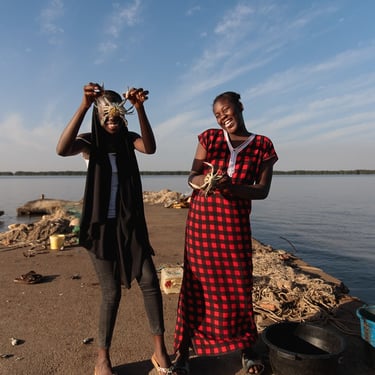
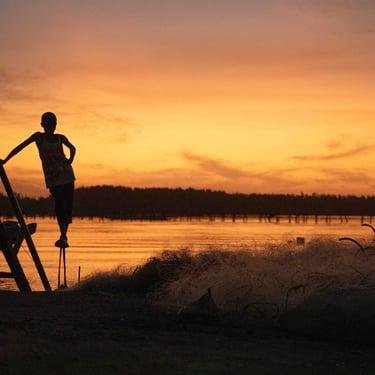
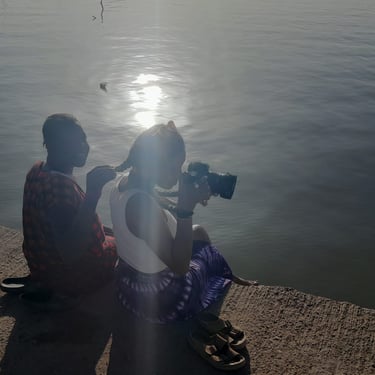
After checking in, a walk through the village led to a pier alive with chatter and movement. To our surprise, the same girls from the shuttle were there, busy fishing for crabs. Using bits of fish as bait, they carefully lowered their lines into the murky water, pulling up small, snapping crabs with practiced ease. They explained that after school, this was their routine — catching crabs to sell along the main road. One proudly mentioned buying a bicycle with her earnings to ride to school; others spoke of helping their parents purchase books and supplies.
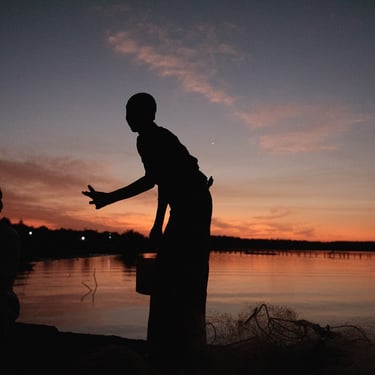
The girls showed us how to bait the hooks, bursting into laughter at our clumsy attempts. As the sun sank lower, the river shimmered beneath a deep orange sky. Between laughter and shared silences, they asked about life in Senegal and Europe, and conversation drifted easily, untroubled by language. By the time dusk settled over the riverbank, we carried with us a quiet gratitude — the kind that lingers long after the day was gone.
A few days later, while chatting with a local boatman in Tendaba, we heard about a certain “Captain Hippo,” a man known for organizing small river trips to see wildlife. The name alone was enough to capture our interest. Determined to find him, we journeyed further inland toward the village of Kuntaur, a quiet settlement on a bend of the Gambia River.
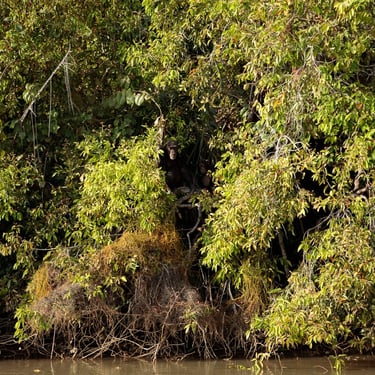
Captain Hippo was easy to spot — his wide grin and booming laughter drew us in before we even introduced ourselves. He explained that he ran boat tours upriver to see hippos and the small population of chimpanzees that had been successfully reintroduced to the area. His enthusiasm was infectious, and within minutes we’d agreed to join him the following day.
That evening, we found modest accommodation nearby in an unfinished room at Kairoh Garden — a simple lodge with bare walls and mosquito nets that had seen better days, but it offered exactly what we needed: a bed, a breeze, and a quiet night.
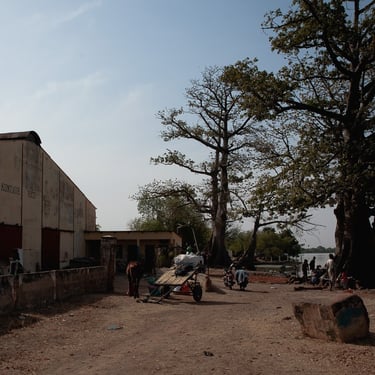
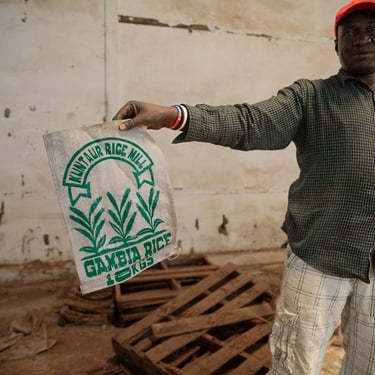
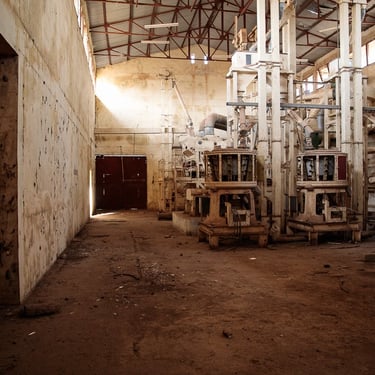
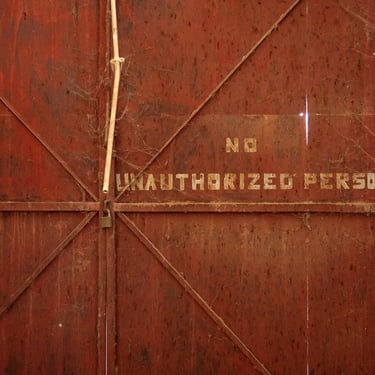
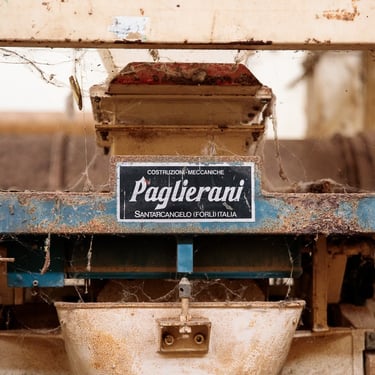
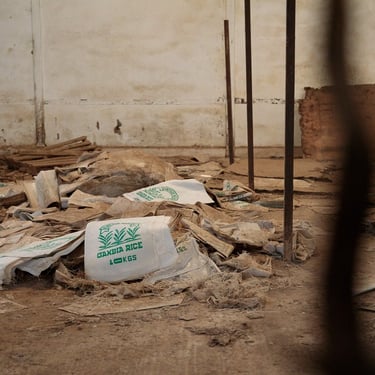
The next morning, we met Captain Hippo by the water. His small wooden boat was patched and weathered but sturdy. Before setting off, he showed us around his village. To our surprise, we stumbled upon an old rice mill — a relic from a bygone era when The Gambia was a hub for rice production. The warehouse still held dusty, unused sacks of rice, untouched for years. It was a haunting reminder of how industries rise and fall, leaving traces of both progress and decline behind.
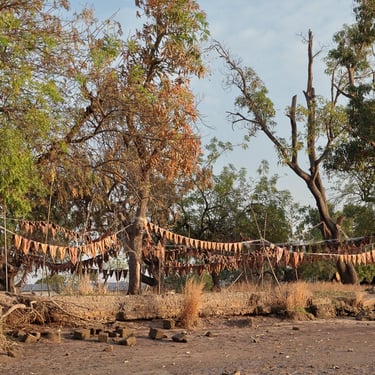
As we walked through the village, we saw fish hanging to dry in the sun. The air carried a mix of river water, smoke, and salt — the scent of riverside life.